Winter Operations at KPTK
Aircraft Deicing & Engine Preheat at Oakland County International Airport
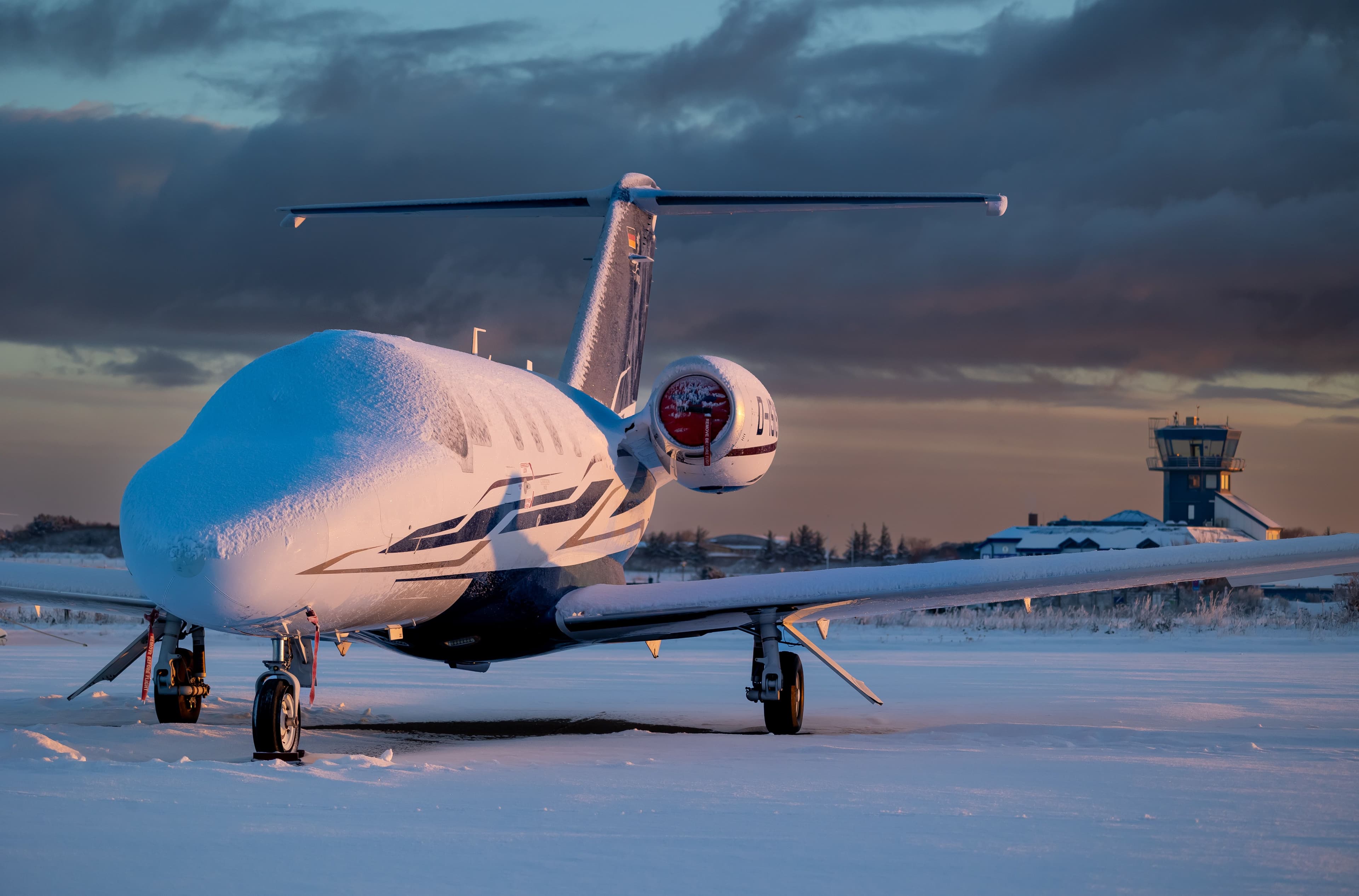
Michigan winters are hard on airplanes. Michigan Aviation deices aircraft at KPTK with heat in our 85,000-square-foot heated hangar or with heated Type I fluid, and offers Type IV anti-icing for longer protection when snow is still falling. We also preheat cold-soaked engines. Our dual-door hangars mean your aircraft is never buried, so a warm, clean airplane can be on the ramp fast.
Services
Winter services at KPTK
Deicing by heat or Type I fluid, Type IV anti-icing, engine preheat, heated hangar, and ground power, all from one team at Oakland County International Airport.
Heat Deicing
We pull the aircraft into our heated hangar and let snow, ice, and frost melt off naturally, with no fluid on the airframe. Surfaces are dried before the aircraft goes back outside so melted water can’t refreeze in hinges, gaps, or wheel wells.
Type I Fluid Deicing
Heated Type I fluid applied on the ramp removes frost, snow, and ice quickly before departure. We record fluid type, mix, and start time so your crew can calculate holdover.
Type IV Anti-Icing
Thickened Type IV fluid applied after deicing to protect a clean aircraft from falling snow and freezing precipitation, with the longest holdover times of any standard fluid. Designed for jets and turboprops that rotate above roughly 100 knots.
Engine Preheat
Preheat for cold-soaked piston and turbine engines so oil flows freely and starts are easier on your engine. Schedule ahead of your departure time.
Heated Hangar Overnight
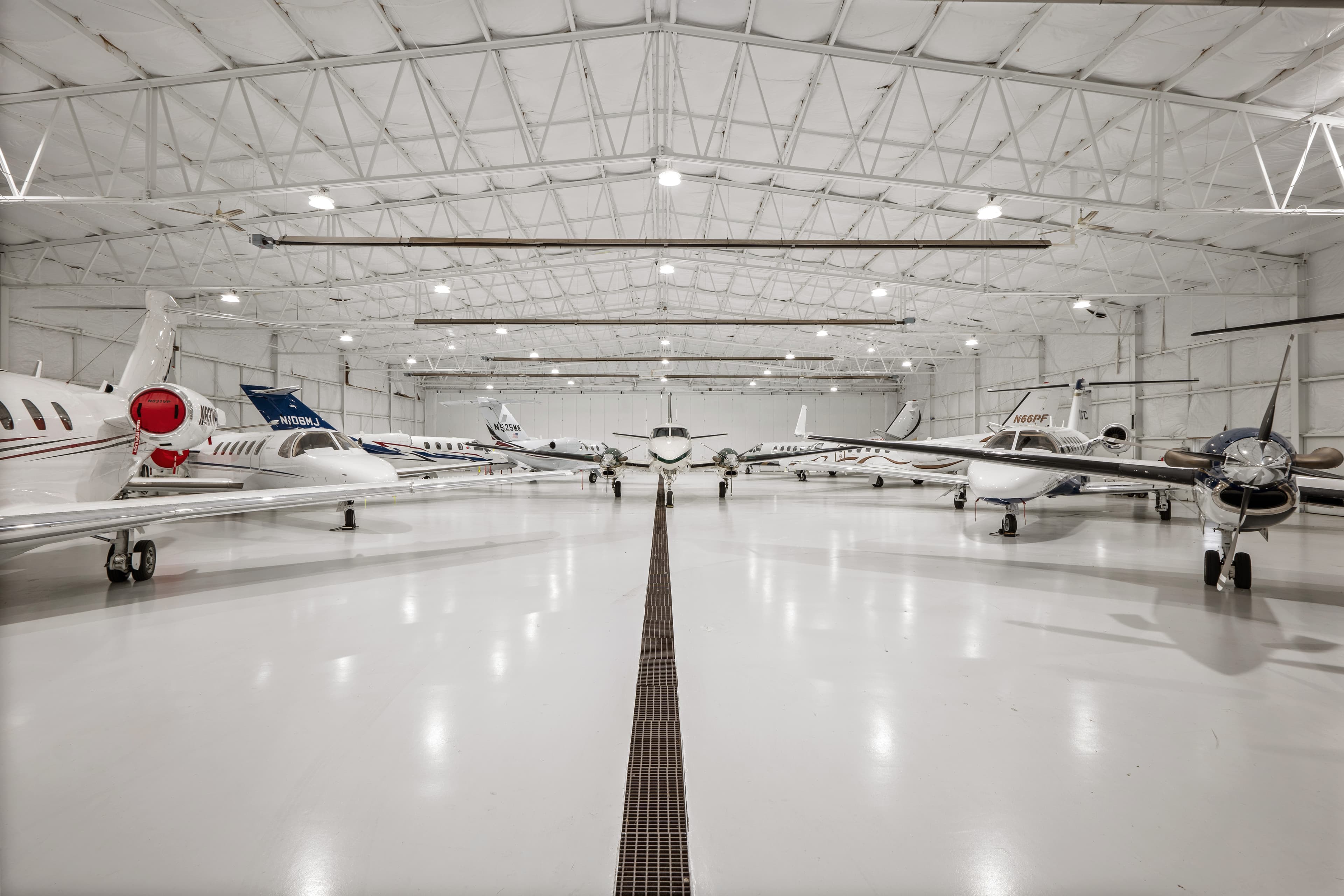
The simplest winter strategy: keep the aircraft inside our heated hangar so it starts the day clean, dry, and warm. Often eliminates the need for both deicing and preheat.
Ground Power
GPU available for cold-weather starts to protect battery life.
Choosing a Method
Heat, Type I, or Type IV: which is right?
Heat (hangar) deicing
- Best for: aircraft with heavy snow or ice accumulation, aircraft already on the field, and owners who prefer no glycol on the airframe.
- No fluid cost. Takes longer, so plan ahead.
- Leaves no fluid on the airframe; if precipitation is still falling, it can be followed by Type IV anti-icing on eligible aircraft.
Type I fluid deicing
- Best for: quick turns, frost or light contamination, and departures where time matters.
- Faster than a hangar thaw.
- Holdover time depends on fluid, temperature, and precipitation.
Type I + Type IV (two-step)
- Best for: jets and faster turboprops departing in active snow or freezing precipitation, or facing longer taxi and hold times.
- Type I removes contamination; Type IV then protects the clean surfaces.
- Longest holdover of the standard fluids.
- Not suitable for most piston aircraft; check your AFM/POH.
Not sure which you need? Call (248) 666-3440 and our line team will recommend the best option for your aircraft, the conditions, and your departure time.
Scheduling
How to schedule
- 01
Call (248) 666-3440 or email fly@michiganaviation.com with your deicing or preheat request and your ETD.
- 02
Our line team watches the forecast and has the aircraft preheated, hangared, thawed, or staged for fluid deicing before your departure time.
- 03
For fluid deicing and anti-icing, the PIC confirms the treatment and we provide fluid type (Type I and/or Type IV), concentration, and application start time. For heat deicing, we confirm the aircraft is fully dry before pulling it out.
Line service hours are 5:00 AM to 11:00 PM, seven days a week, excluding holidays. 24-hour service is available with advance notice.
Prevention
Avoid ice before it forms
The cheapest deicing is the one you don't need. A night in our heated hangar keeps frost, snow, and ice off the airframe and keeps the engine warm, which matters for piston owners: Continental recommends preheat when an engine has been exposed to 20°F or below for two hours or more, and Lycoming when engine temperature drops below 10°F (20°F for -76 series engines).
Experience
Built for the aircraft we see every day
As a Cessna, Piper, and Williams service center supporting Citation 500 series and CJ jets, turboprops, twins, and singles, our team knows how winter affects each type. If deicing or preheat turns up a maintenance question, our FAA-certified repair station is on the same field.
Pricing
Quoted by aircraft and conditions
Type I deicing and Type IV anti-icing are priced by fluid used, which depends on aircraft size and conditions. Heat deicing, preheat, and nightly hangar are quoted by aircraft type. Call (248) 666-3440 for a quote.
Flying out of KPTK this winter?
Tell us your departure time and we will have a warm, clean aircraft waiting. Deicing, preheat, and heated hangar are all available at Michigan Aviation.