Aircraft painting at KPTK
Aircraft Painting in Michigan
Michigan Aviation paints aircraft in-house at its FAA-certified repair station at Oakland County International Airport (KPTK) in Waterford, Michigan, about 30 miles northwest of Detroit. Because paint, maintenance and avionics work happen with one team on one field, the corrosion found under old paint, flight-control balancing, weight and balance, and the logbook sign-off are handled in the same place as the refinish itself. To start, send your aircraft’s make, model and current condition for a written estimate and schedule.
Request a paint estimate
Quick facts
- Location
- KPTK · Waterford, Michigan
- Certification
- FAA-certified repair station
- On the same field
- Maintenance, avionics, heated hangars
- At KPTK since
- 1957
What a reputable aircraft paint shop should do
Whether you choose us or another shop, a quality exterior refinish has a few non-negotiables. Use this list to compare any Michigan paint facility:
- FAA repair station with the right ratings. Part 145 airframe ratings are issued by class, covering small or large aircraft and composite or all-metal construction. Ask which ratings cover your airplane.
- Strip, don’t stack. Painting over old paint adds weight with every refinish. A full strip also exposes the metal so corrosion can be found and treated.
- Control surfaces off and rebalanced. Ailerons, elevators and rudders are removed, painted separately and balanced to the maintenance manual before they go back on. Paint changes their balance, and an out-of-balance surface can flutter.
- Measured paint thickness. Manufacturers set limits for some surfaces, and paint that’s too thick is more prone to cracking.
- Weight and balance updated after the job, and a proper maintenance record entry for return to service.
- A written process for surprises. If corrosion or damage turns up after the strip, you should get a written estimate and give approval before extra work begins.
- A written warranty with clear terms, and references from owners of similar aircraft.
Exterior refinishing: what a full strip and repaint includes
A complete exterior refinish is mostly preparation. Published accounts put prep at roughly 80 to 90 percent of the job, which is why two quotes for the “same” paint job can differ so much.
A typical sequence:
- Scheme approval. Colors, stripes, logos and registration-mark placement are settled before the aircraft arrives.
- Incoming inspection for existing damage, corrosion and fuel leaks, with the findings documented.
- Parts removal and masking. Flight controls, and often flaps, come off. Windows, lenses, de-ice boots, seals, tires and antenna bases are masked because strippers attack plastic and rubber.
- Strip and clean back to bare metal (or to primer on composite parts — see below).
- Corrosion inspection and treatment of the exposed structure.
- Surface treatment and primer: cleaning, etch, conversion coating and a corrosion-inhibiting primer.
- Topcoat, stripes and markings, applied and cured under controlled temperature and humidity.
- Balance, reassemble and inspect: control surfaces balanced and reinstalled, seams sealed, a final inspection for runs, fish-eye, orange peel and overspray, then weight and balance and the logbook entry.
For more detail, read the strip and repaint process, step by step.
Painting composite aircraft structures
Composite airframes and parts need a different approach from aluminum. Chemical strippers can attack the resin in fiberglass and carbon-fiber parts, so composite surfaces are typically sanded rather than chemically stripped. Some shops estimate that prep takes longer on composites, and hand sanding is common.
What we pay attention to on composite structures:
- Pinholes. Small resin-starved voids can keep absorbing primer and show through the finish if they aren’t sealed during prep.
- Movement and micro-cracking. Composites expand and contract differently from aluminum, and keeping paint within thickness limits helps delay cracking.
- UV protection. Composite structures depend on their coatings for UV protection, so the primer and topcoat system should be one approved for the aircraft.
- Lightning-strike mesh and static wicks. Some composite panels carry a metal mesh for lightning protection. Checkerboard-pattern bubbling in the paint can signal corrosion of that mesh, and a repaint is the practical time to repair it. Cracked paint at static wick bases can let moisture in.
- Mixed structures. Many “composite” aircraft still have aluminum parts. Cirrus flight controls, for example, are aluminum and need the same corrosion attention as any metal airframe.
- Manufacturer approvals. Composite aircraft often have approved paint systems and color guidance. Bring your manufacturer’s requirements to the estimate.
Corrosion protection during refinishing
The best chance to find and fix corrosion is when the old paint is off. Corrosion often hides under paint that looks fine, especially on aircraft that have spent winters in Southeast Michigan, where road salt, humidity and freeze-thaw cycles all work on an airframe.
Corrosion protection during a refinish typically includes:
- Inspection of the bare structure, including lap and butt joints, faying surfaces, fastener heads, the areas under antennas, flap tracks and wheel wells.
- Treatment within the manufacturer’s limits. FAA guidance in Advisory Circular 43-4B calls for removing corrosion within the manufacturer’s allowable limits and consulting the manufacturer when damage goes beyond them.
- Restoring the protective system. A corrosion repair isn’t complete until the conversion coating, primer and topcoat are restored. Old sealant at lap and butt joints is commonly replaced during the strip.
- Corrosion-inhibiting compounds where the maintenance manual allows them, applied after paint to protect joints and hidden areas.
Because our aircraft maintenance team is on site, structural findings can be assessed by the same repair station rather than sent elsewhere. If you already know about corrosion on your aircraft, tell us at the estimate so it can be planned and priced up front. Learn more in what a paint inspection checks for hidden corrosion.
Paint and interior refurbishment in one downtime
If your private plane needs both a new exterior and a refreshed interior, planning them together can save a second trip out of service. Industry guidance recommends deciding interior and avionics scope before the paint job starts and scheduling inspections during the same downtime.
Tell us about your interior plans when you request a paint estimate. We’ll confirm the interior scope for your aircraft and how it fits the schedule, so seats, panels and trim come out and go back in once, and colors inside and out are chosen together.
Why paint at KPTK
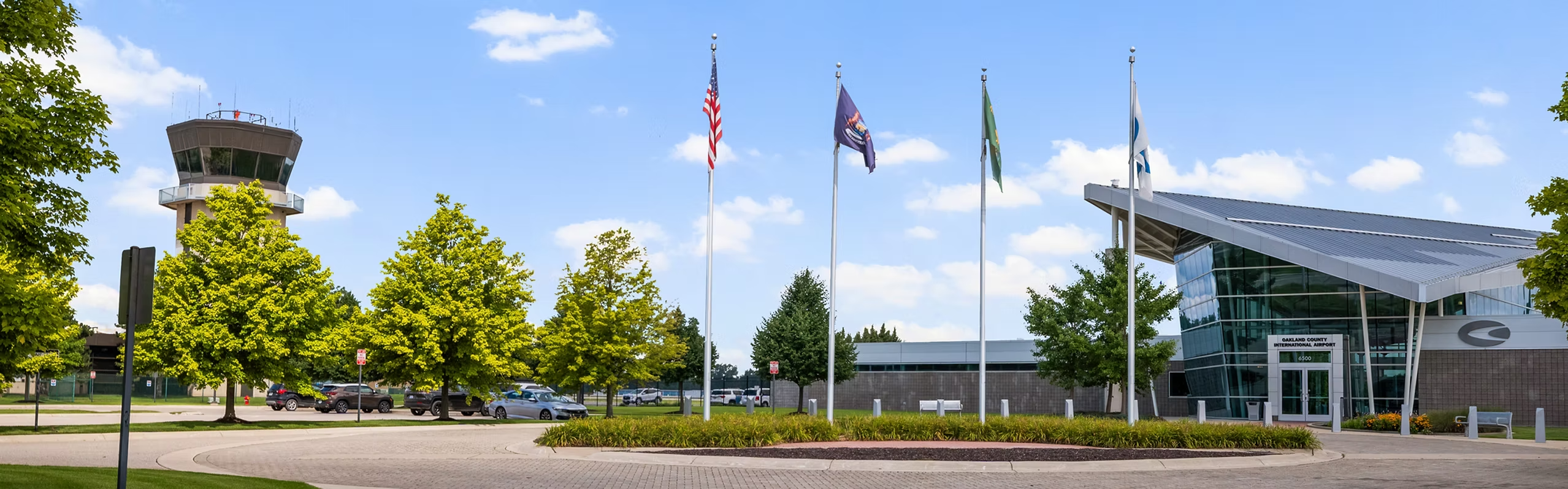
- One field, one team. Paint, maintenance and avionics are on site, so you can line up an annual or other inspection with paint downtime instead of scheduling two separate events.
- Heated hangars. Paint cures best in a controlled environment, and freshly painted aircraft are better protected indoors. Michigan Aviation offers heated, dual-door hangar space at KPTK.
- An easy airport to reach. KPTK has three runways, including a 6,521-foot ILS-equipped primary, in Class D airspace with no commercial traffic. See the pilot’s guide to flying into KPTK.
- 65+ years on the field. Michigan Aviation has served aircraft owners at Oakland County International Airport since 1957.
How to request a paint estimate
Send us the following so we can give you an aircraft-specific estimate and schedule:
- Make, model, serial number and tail number
- Photos of the current paint, including any bubbling, cracking or peeling
- Known corrosion, damage or recent structural repairs
- Your scheme: a design, a reference photo, or the colors and stripes you have in mind
- Interior or avionics work you’d like to combine
- Preferred drop-off window and the latest date you need the aircraft back
Planning ahead helps. For published price ranges and typical timelines, see aircraft paint cost and downtime in Michigan.
What else should I know?
Does Michigan Aviation paint aircraft in-house?
Yes. Michigan Aviation performs aircraft paint work at its FAA-certified repair station at Oakland County International Airport (KPTK) in Waterford, Michigan. Maintenance, avionics and heated hangar space are on the same field.
Can you paint composite aircraft?
Composite structures are prepped differently from aluminum: they are generally sanded rather than chemically stripped, and pinholes, UV protection and lightning-strike mesh need attention. Share your make, model and the manufacturer’s paint requirements when you request an estimate so the scope can be confirmed for your aircraft.
Do you treat corrosion found during a repaint?
Corrosion found after the strip is inspected and treated within the manufacturer’s limits, and the conversion coating, primer and topcoat are restored over the repair. Any additional work is quoted in writing for your approval before it begins.
Can I combine my annual inspection with a paint job?
Often, yes. Because maintenance is on site at KPTK, an annual or other scheduled inspection can be planned into the same downtime. Mention it when you request your paint estimate so both can be scheduled together.
Can you do the exterior paint and interior refurbishment together?
Tell us your interior plans when you request a paint estimate. We’ll confirm the interior scope for your aircraft and sequence it with the paint work so the aircraft is out of service once.
Last updated: