Jet-A vs 100LL: Engine Compatibility, Misfueling Risks and Fuel Quality Checks
TL;DR
- • Turbines burn Jet-A; spark-ignition pistons need avgas such as 100LL
- • Some diesel piston engines are certified for Jet-A — the certification decides it, not the airframe
- • Jet-A in an avgas piston engine can cause detonation and engine failure
- • Misfueling is prevented by nozzle design, filler-port decals, truck labeling and confirming the grade out loud
- • Airport certification requirements and an FBO's own quality control are two different things worth asking about separately
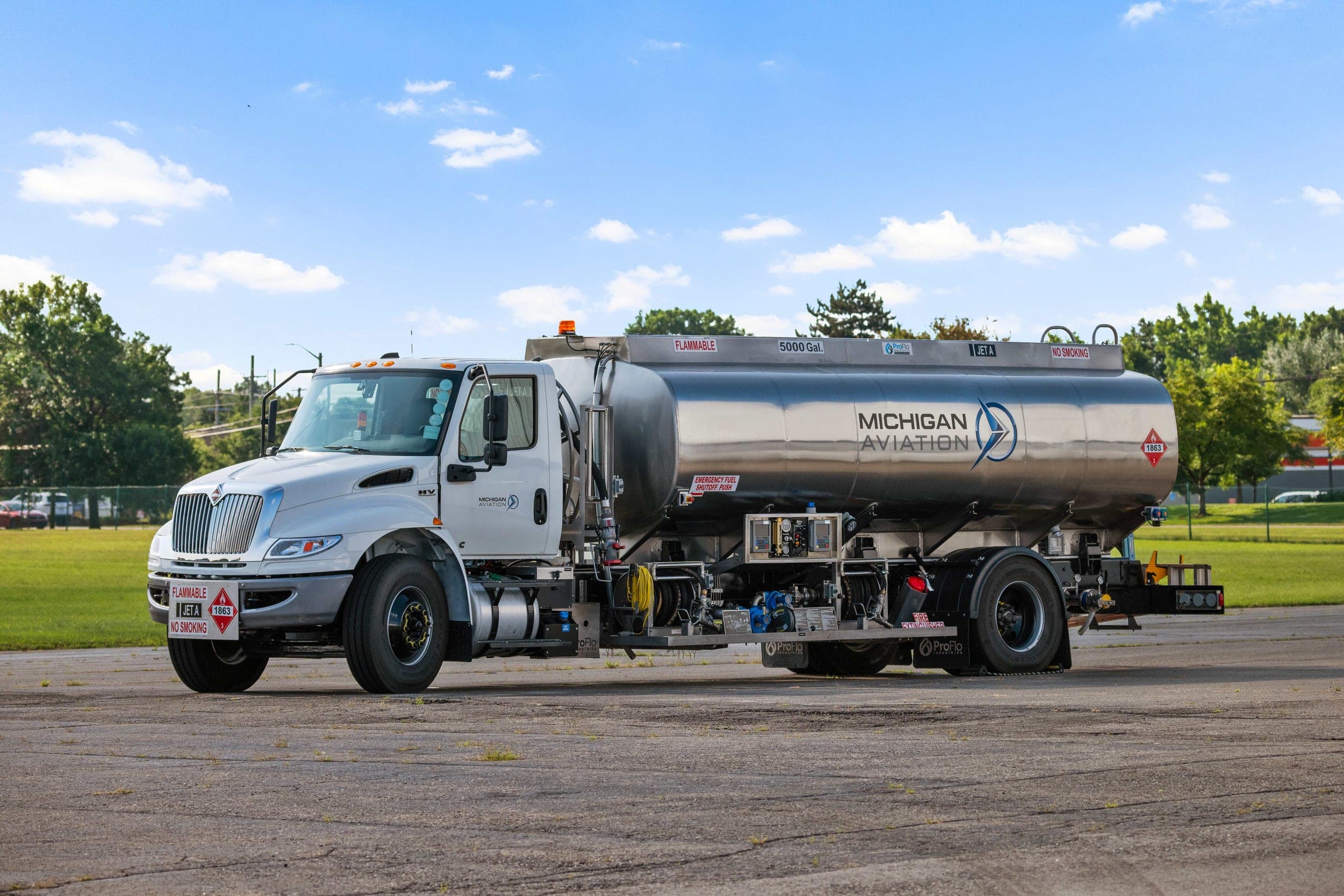
We dispense both Jet-A and 100LL at KPTK, which means the grade question comes up on the ramp several times a day. Most of the time it is settled in a sentence. The cases worth writing about are the ones where the airframe does not tell you the answer — a piston twin that takes Jet-A, a turbine whose AFM has something to say about avgas — because those are where an assumption becomes expensive.
What follows is how the two fuels differ, what the wrong one actually does, how misfueling gets stopped before it happens, and what the testing and certification picture looks like behind the nozzle.
How does Jet-A differ from 100LL in terms of engine compatibility?
Turbine engines burn Jet-A, and spark-ignition piston engines need avgas such as 100LL. Some diesel piston engines are certified to run on Jet-A, such as the Continental CD-135/CD-155 and the Austro Engine AE300.
The distinction that matters is ignition, not airframe. A turbine ignites a continuously burning kerosene flame. A spark-ignition piston engine compresses a fuel-air charge and lights it with a spark at a precise moment, which requires a fuel that resists igniting on its own under compression — that is what avgas is formulated to do. A compression-ignition diesel piston engine is closer to the turbine in what it wants from a fuel, which is why those engines are certified for Jet-A while the Lycoming or Continental in the hangar next door is not.
The practical takeaway: the engine certification decides the grade. Do not reason from the aircraft type, the number of engines, or what the aircraft parked beside you is taking.
| Property | Jet-A | 100LL avgas |
|---|---|---|
| Fuel type | Kerosene-type turbine fuel | Leaded aviation gasoline |
| Color | Clear to straw | Blue (dyed) |
| Typical engines | Turbines, plus Jet-A-certified diesel pistons | Spark-ignition pistons (Lycoming, Continental) |
| Lead | None | Contains tetraethyl lead |
| Freezing point (maximum) | −40°C (−40°F) | −58°C (−72°F) |
| Approximate weight | About 6.7 lb per U.S. gallon | About 6.0 lb per U.S. gallon |
What happens if the wrong fuel goes in?
Jet-A in an avgas piston engine can cause detonation and engine failure. Kerosene has none of the detonation resistance a spark-ignition engine depends on, and the engine may still start and run long enough to get the aircraft airborne before it fails — which is what makes this the more dangerous direction of the two.
Avgas in a turbine is a different problem with a different answer: follow the AFM's limits. Some turbine aircraft permit avgas in defined circumstances with restrictions attached, and others do not. The flight manual is the authority, not a rule of thumb, and not the line crew.
In either direction, if you suspect the wrong grade went in, the aircraft does not fly. Draining the sump does not resolve a misfueling event — the fuel is through the system, and that becomes a maintenance question rather than a preflight one.
How misfueling is prevented. It is deliberately layered, so no single lapse is enough on its own:
- Different nozzle types. Jet-A and avgas nozzles are not interchangeable by design, which resists a wrong-grade connection at the aircraft.
- Fuel-grade decals near the filler ports. The required grade is marked where the cap is, where whoever is holding the nozzle will read it.
- Truck and tank labeling. Grades are labeled on the equipment so the source is identifiable before anything is dispensed.
- Confirming the grade with the pilot. Saying the grade and quantity out loud, and getting it confirmed, is the layer that catches what the hardware does not.
AOPA's "Misfueled" article is worth reading for how these events actually unfold rather than how they are supposed to be prevented. A related habit covered in our guide to aircraft fuel contamination and sump checks applies here too: check the color of the sample against the grade you asked for, because that is the last point at which a wrong grade is still catchable on the ground.
What is the chemical difference between leaded and unleaded avgas?
The difference is tetraethyl lead, an additive in 100LL that raises the fuel's octane rating and prevents detonation. Octane rating is a measure of how well the fuel resists igniting under compression before the spark arrives, and detonation — that premature, uncontrolled combustion — is what damages pistons, valves and cylinder heads in a spark-ignition engine.
Higher-compression engines need more of that resistance, which is why lead has been difficult to remove from aviation gasoline even though it was eliminated from automotive fuel decades ago. The "LL" in 100LL stands for low lead, which is relative to the higher-lead avgas grades it replaced rather than meaning a small amount in absolute terms.
Unleaded alternatives are being developed and approved, with the goal of a fuel that delivers equivalent detonation protection without the lead. The status of that transition changes, so rather than summarize it here, see the FAA's leaded aviation fuel and the environment page for the current position. If you are weighing an engine or fuel decision against that transition, the fuel your engine is certified for today is still the fuel that goes in today.
Why is an aircraft grounded before fueling?
Because moving fuel generates static electricity, and a static discharge near an open filler port and fuel vapor is an ignition source. Connecting the aircraft and the fuel source electrically gives that charge somewhere to go other than across an air gap as a spark.
Two terms get used interchangeably and should not be. Bonding connects the fuel source to the aircraft so both sit at the same electrical potential — it does not matter what that potential is relative to the earth, only that there is no difference between the two objects that could jump as a spark. Grounding connects to earth, giving accumulated charge a path to dissipate into the ground itself.
Bonding is standard practice before the fuel cap comes off, and it is the step that directly addresses the spark-between-two-objects risk at the filler port. Fuel flowing through hoses and filters generates charge continuously while fueling is in progress, not just at the moment of connection, which is why the bond stays in place for the duration rather than being made and broken at the start.
What does the FAA require for fuel quality testing at airports?
FAA requirements in this area attach primarily to certificated airports and their fueling agents rather than to every fuel seller, and they sit alongside industry standards that are not themselves FAA rules. Those are three separate layers, and they are easy to blur together when you are trying to evaluate a fuel supplier.
- FAA Advisory Circular 150/5230-4C addresses aircraft fuel storage, handling, training and dispensing at airports. See the current version of the AC for its scope and applicability.
- Part 139 airport certification is what brings fueling-agent inspection and training obligations into force at certificated airports serving scheduled air carrier operations. The FAA's overview of Part 139 explains which airports it covers.
- Industry standards that many fuelers work to, such as ATA Spec 103 for jet fuel quality control, cover filtration, sampling, tank and truck sumping, and recordkeeping in more operational detail than the regulatory layer does.
The distinction worth carrying into a conversation with any FBO: airport certification requirements describe obligations placed on the airport and its fueling agents under the airport's certificate, while an FBO's own fuel quality practices are what that specific operator does day to day — how often equipment is sumped, how filters are monitored, what gets written down, and how staff are trained. An airport meeting its certification requirements does not tell you what any individual fuel seller on that field does, and the second question is the one that affects what comes out of the nozzle into your tanks. Ask it directly.
How to order fuel at KPTK, and what to ask any FBO about fuel quality
Michigan Aviation provides Jet-A and 100LL at KPTK. Request fuel through FlightBridge or by phone, and specify the grade — not just the quantity — so the right truck is staged before you arrive.
If your aircraft needs Jet-A with Prist, include that in the request and confirm availability rather than assuming it on arrival. Full details on ordering are on our fuel services page.
Questions to ask any FBO about fuel quality. These are reasonable to ask anywhere you buy fuel, and a good operator will answer them without hesitation:
- How often are tanks and trucks sumped?
- How are filters monitored and changed?
- What records are kept?
- How are grades kept separate?
- What training do line staff have?
The Bottom Line
Engine certification decides the grade — turbines and certified diesel pistons take Jet-A, spark-ignition pistons take avgas such as 100LL, and nothing about the airframe overrides that. Jet-A in an avgas piston engine can cause detonation and engine failure; avgas in a turbine is governed by the AFM. Say the grade out loud when you order and when you are fueled, check the sample color against what you asked for, and ask any FBO how it sumps, filters and documents the fuel it sells.
If you are flying into Oakland County International Airport and want the grade and any Prist requirement confirmed before you land, tell us when you request fuel and we will have it staged. If you want to talk through how the fuel you are buying is handled, that conversation is easier on the ramp than after a write-up.
Frequently Asked Questions
Can a piston airplane use Jet-A?
Only if the engine is certified for it. Certain diesel piston engines, such as the Continental CD-135 and CD-155 and the Austro Engine AE300, are approved to burn Jet-A. Standard spark-ignition piston engines cannot. Those engines require avgas such as 100LL, and Jet-A in one of them can cause detonation and engine failure.
What color is 100LL avgas?
Blue. The dye is there so the grade can be identified in a clear fuel tester during a sump check. Jet-A runs clear to straw, so a sample whose color does not match the grade you asked for is a stop-everything finding rather than a cosmetic one.
What is misfueling and how is it prevented?
Misfueling is delivering the wrong grade to an aircraft. It is prevented in layers: different nozzle types that resist a wrong-grade connection, fuel-grade decals near the filler ports, clear labeling on trucks and storage tanks, and the line crew confirming the grade with the pilot before the cap comes off.
Does Michigan Aviation sell both Jet-A and 100LL at KPTK?
Yes, we provide both Jet-A and 100LL at Oakland County International Airport. Specify the grade when you request fuel, and include any Prist requirement in the request so we can confirm availability before you arrive. See our fuel page at /fuel for how to order.